
Recent POST


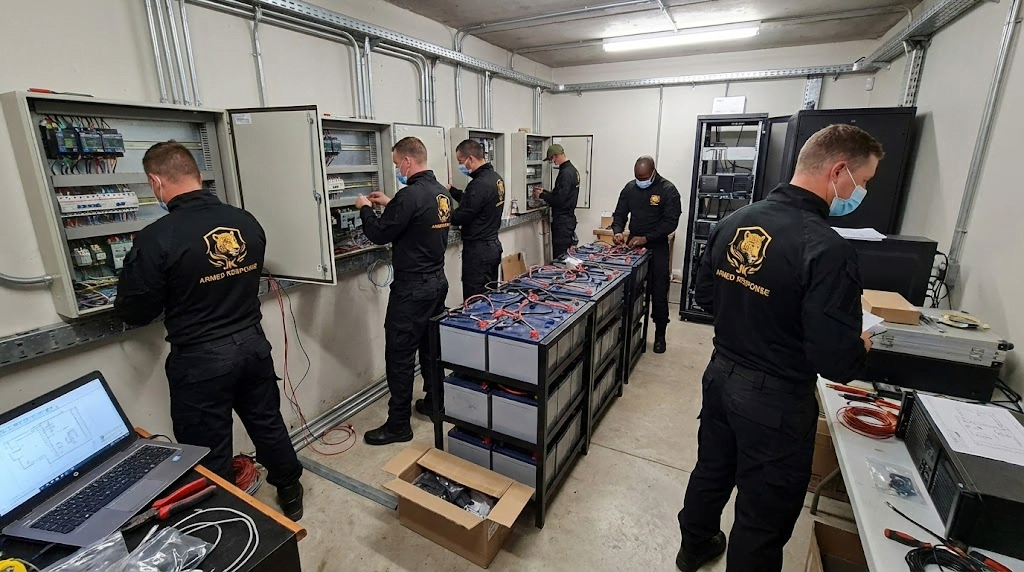
Your alarm system is your first line of defense. But does it work when Eskom stops working?
It is a terrifying thought: the power goes out at 2:00 AM, and your security system dies with it.
In South Africa, load shedding is not just an inconvenience; it is a major security risk.
Criminals are opportunistic. They know that standard alarm batteries often fail after just a few hours of darkness.
When your power cuts, you need to know—without a shadow of a doubt—that your armed response signal is still live.
At JK Armed Response, we have seen the data, and we know the solution.
This article explains exactly why standard systems fail and how you can fix it today.
Why Standard Alarms Fail During Load Shedding
Most home alarm systems come with a standard 7Ah lead-acid battery.
Under normal conditions, this battery is fine. It keeps your system running for 2-4 hours during a rare power outage.
But “normal” does not exist in South Africa anymore.
Here is the problem:
- The Recharge Cycle: A standard lead-acid battery needs about 24 hours to fully recharge.
- The Reality: If you have load shedding twice a day, your battery never gets full.
- The Result: Within a few weeks of Stage 4 or Stage 6, the battery is destroyed.
When the battery voltage drops below 10.5V, your alarm system starts behaving erratically.
It may trigger false alarms, annoying your neighbors and wasting valuable armed response resources.
Eventually, it shuts down completely.
Critical Stat: According to recent industry reports, 78% of Gauteng residents fear a crime surge during load shedding. Insurance data also suggests a strong link between power cuts and property crime in wealthier areas.
If your keypad lights are dimming during a blackout, your system is already vulnerable.
The Solution: JK Armed Response Battery Backup Systems
You do not need to buy a whole new alarm system.
You just need to upgrade how it is powered.
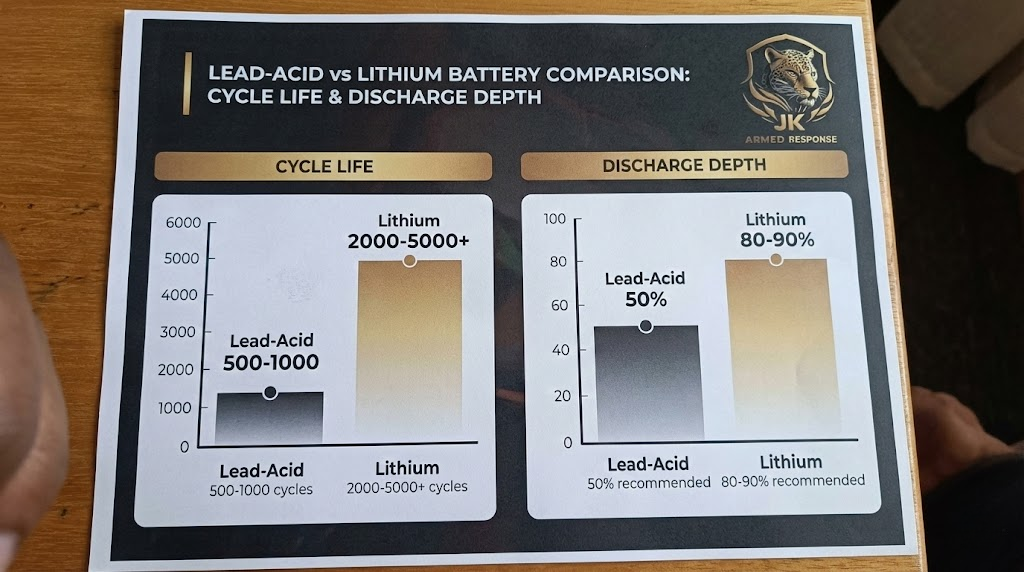
We recommend replacing standard batteries with Lithium Iron Phosphate (LiFePO4) solutions.
Here is why this upgrade is non-negotiable for South African homes:
- Faster Charging: Lithium batteries can recharge in 1-2 hours. They are ready for the next blackout before it happens.
- Longer Lifespan: A lead-acid battery lasts about 200-300 cycles (about 6 months of heavy load shedding). A lithium battery lasts 2000+ cycles (5 to 10 years).
- Consistent Power: They maintain a steady 12V output until they are almost empty, preventing false alarms caused by voltage drops.
Solar Integration
For the ultimate peace of mind, we can link your security system to a small, dedicated solar panel.
This creates a self-sustaining loop.
Even if the grid is down for days, your perimeter beams and panic buttons remain active.
Critical Components We Backup (Not Just the Alarm)
Many homeowners make the mistake of only backing up the main alarm box.
This leaves huge gaps in your security.
Setup for security must cover these four points:
1. The Keypad & Radio
The radio transmitter is the most important part of your system.
If the radio has no power, it cannot send a signal to the JK Control Room.
You might hear the siren, but we won’t know you need help.
2. Electric Fencing
A dead electric fence is nothing more than a ladder for intruders.
We install specific energizer backup solutions that keep the voltage high, deterring anyone from touching the wires.
3. Gate Motors
Highjacking risks increase significantly when you are stationary outside your home.
If you have to get out of your car to manually open a gate in the dark, you are a target.
Our battery backups ensure your gate motor works fast, every time.
4. CCTV Cameras
Criminals often scout homes during power cuts.
If your cameras are off, you lose critical evidence.
We can install a mini-UPS specifically for your DVR/NVR and cameras to keep recording 24/7.
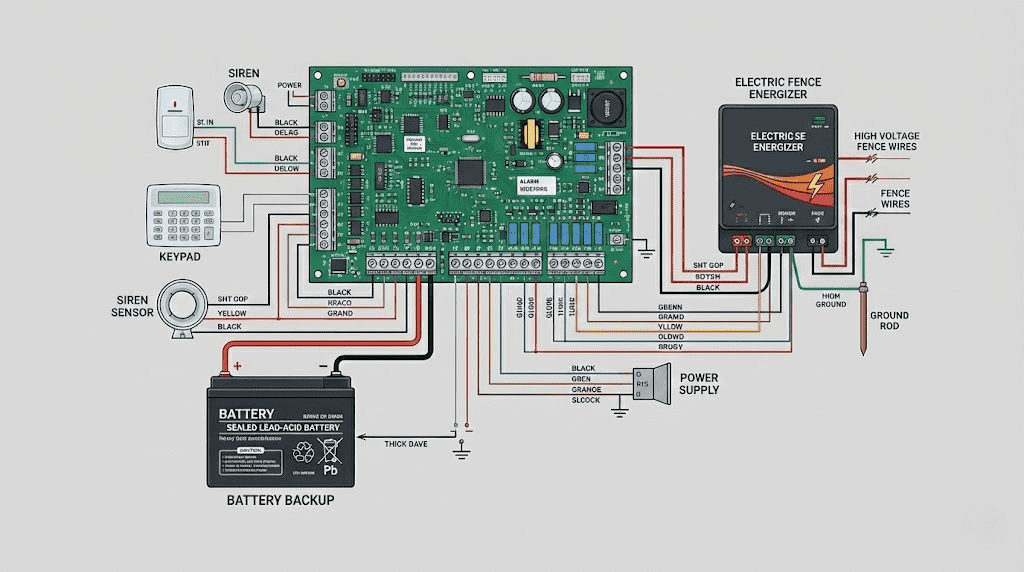
Technical Guide: Choosing the Right Backup
You don’t need to be an electrician to understand this.
We simplify the choice based on your property size:
For Apartments & Small Homes
- Requirement: Basic sensor backup.
- Solution: A direct swap of your internal 7Ah lead-acid battery to a 7Ah Lithium battery.
- Cost: Low.
- Installation Time: 15 minutes.
For Large Homes (4+ Bedrooms)
- Requirement: Powering multiple outdoor beams, passives, and a radio.
- Solution: An external power supply box with an 18Ah to 100Ah battery.
- Why: Outdoor beams draw more power. A small battery will drain in under an hour.
Maintenance Tip
Test your system monthly.
Turn off your mains power at the breaker.
If the alarm siren sounds weak or the keypad turns off immediately, your battery is dead.
Why Choose JK Armed Response?
We are not just selling batteries; we are selling safety.
Our team understands the specific crime trends in your neighborhood during load shedding schedules.
- Proactive Alerts: Our modern systems send a “Low Battery” signal to our control room. We call you before your system dies.
- Professional Installation: Incorrect wiring can blow your alarm board. Our technicians are certified to work on all major alarm brands.
- Local Support: We are right around the corner. When you need us, we are there.
Don’t Wait for the Next Blackout
Security is about staying one step ahead.
If your alarm battery is older than 12 months, it is likely already failing.
Don’t wait for a break-in to find out your system was offline.
Contact JK Armed Response today.
We will perform a free battery health check and provide a quote for a load-shedding-proof backup solution.
- Stay safe.
- Stay powered.
- Stay secure.
Security systems with battery backup for Load Shedding
Your alarm system is your first line of defense. But does it work when Eskom stops working? It is a terrifying thought: the power goes out at 2:00 AM, and your security system dies with it. In South Africa, load shedding is not just an inconvenience; it is a major security risk. Criminals are opportunistic. […]

One thought on “Security systems with battery backup for Load Shedding”