
Recent POST


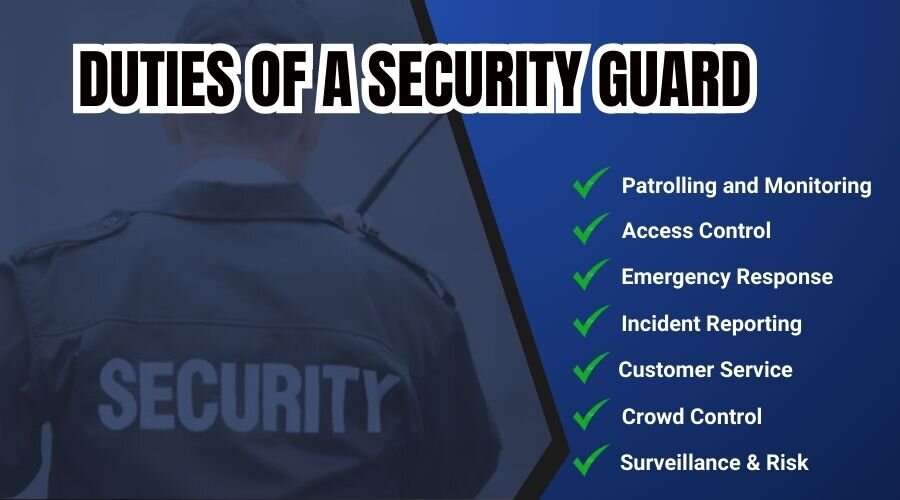
Security Guards Responsibilities in patrol premises. They control access points, they monitor for threats, they respond to incidents and file reports. These four core duties form the foundation of every shift. Over 1.27 million security guards work across the United States as of 2024. The Bureau of Labor Statistics lists their median annual wage at $38,370. Properties with visible guards see 60-80% fewer opportunistic crimes such as theft and vandalism.
What Security Guard Patrols Look for on Patrol | IronRock
Guards prevent loss before it starts. They protect people and assets daily. Their role goes beyond standing still. It demands quick decisions under pressure. This guide breaks down every major responsibility with clear steps you can use on site.
Patrolling, Surveillance, and Visible Deterrence
Patrols form the first line of defense. Guards walk or drive set routes. They scan for unlocked doors, broken windows, or unusual activity. CCTV monitoring runs alongside these checks. The goal stays simple: spot problems early and stop them.
Fatigue hits hard on long shifts. Blind spots appear in large facilities. Fix this with a 30-minute rotation schedule. Pair it with AI camera alerts for real-time flags. High-visibility positioning near entry points boosts deterrence without extra staff.
Retail sites face shoplifting spikes near exits. Construction zones deal with tool theft at night. Residential complexes handle loitering complaints. Tailor patrols to the site. A daily deterrence log tracks what worked and what did not.
Patrol Checklist (copy and use):
- Check all perimeter doors and windows.
- Note lighting issues or obstructions.
- Log any suspicious vehicles or persons.
- Verify CCTV cameras face the right direction.
- Report hazards immediately.
Access Control and Visitor Management
Access control stops unauthorized entry. Guards verify IDs, scan badges, and log visitors. Bag checks and vehicle inspections happen at gates. Denying entry follows clear protocols.
Tailgating remains a top issue. Dual-verification rules cut it down. One guard checks credentials while another watches the line. Digital visitor apps speed up high-volume sites and create instant records.
Corporate offices integrate badges with HR systems. Hospitals follow HIPAA rules during checks. Events use wristbands plus metal detectors. A tiered access list separates employees, contractors, and guests.
Access Denial Script (say it calmly): “Sir, I need to see valid ID for this area. Without it, I cannot allow entry. Would you like to contact your host?” Log every refusal with time, reason, and outcome.
Emergency Response and Crisis Management
Emergencies test every guard. Medical aid comes first until paramedics arrive. Fire alarms trigger evacuation routes. Intrusions require immediate lockdown and police calls.
Panic clouds judgment. Use a simple matrix: Assess the threat, secure the area, report details, then assist. Pre-set radio codes speed up coordination with law enforcement.
Nightclubs manage crowd surges. Warehouses handle chemical spills. Schools practice lockdown drills. Run joint exercises quarterly so everyone knows the plan.
60-Second Decision Tree:
- Is anyone hurt?
- Is the area safe?
- Who needs to know right now?
- What help do I call? Debrief after every incident to sharpen the next response.
Incident Reporting, Documentation, and De-Escalation
Reports create the official record. Write who, what, when, where, why, and how. Vague entries create legal headaches later. Body-cam footage backs up every detail when used correctly.
Verbal fights can turn physical fast. Follow five steps: Listen without interrupting. Show empathy. Ask open questions. Offer a solution. Document everything.
Legal duties vary by state. Guards follow the use-of-force continuum. They respect privacy laws and avoid discrimination. Incomplete reports have led to lawsuits in multiple cases. A fillable template keeps entries consistent and court-ready.
De-escalation Phrases That Work: “I understand you’re upset. Let’s step aside and figure this out.” “I’m here to help. What do you need right now?”
Industry-Specific Security Guard Responsibilities
No two sites are the same. Retail guards watch for shoplifters and bag checks. Corporate teams manage badge systems and after-hours access. Residential patrols focus on noise complaints and package theft.
Healthcare settings add patient privacy rules. Event guards count crowds and clear exits fast. Construction sites secure heavy equipment overnight. Armed guards carry extra policy training on deadly force.
Post orders must match the client’s exact needs. Review them at the start of every contract. Update when risks change.
Legal, Ethical, and Training Requirements
Every guard follows licensing rules in their state. Training covers first aid, active shooter response, and basic cybersecurity for tech-heavy sites. The use-of-force policy stays front and center.
Daily compliance checklists prevent lawsuits. Privacy rules such as GDPR or CCPA equivalents limit what guards can record or share. Non-discrimination training keeps interactions fair.
Body cams, drones, and AI analytics now support traditional duties. Guards who master these tools deliver better results and stay ahead of industry changes.
How Employers and Guards Can Measure and Improve Performance
Track three numbers: incident reduction, response time under five minutes, and report accuracy above 95%. Client satisfaction scores show the rest.
High turnover often stems from poor scheduling. Targeted retraining fixes skill gaps fast. A 10-question self-audit helps guards spot weak areas before problems grow.
Security guards do more than watch doors. They prevent incidents, manage crises, and document facts. Their work keeps people safe and businesses running. Use these strategies on your next shift or when you hire a team. For deeper background on the profession, check the security guard Wikipedia page.
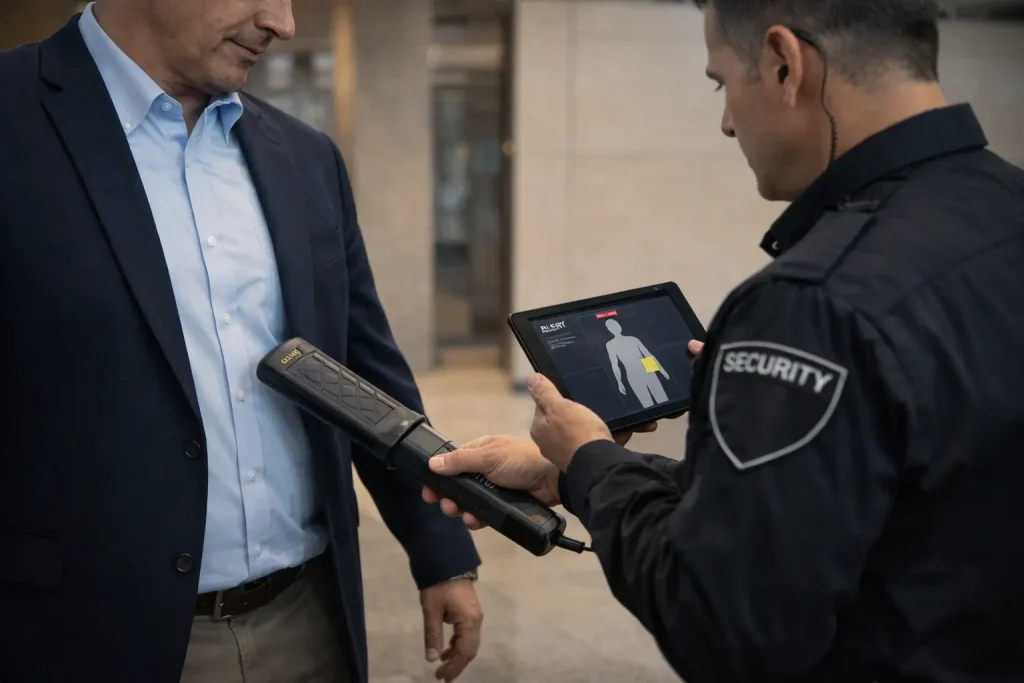
What to Know About Concealed Weapons Detection Systems
FAQ
What are the top daily security guard responsibilities? Patrols, access control, surveillance, emergency response, and accurate incident reports.
How do security guards handle access control problems? They use dual verification, digital logs, and clear denial scripts to stop tailgating and forged credentials.
What legal responsibilities apply during emergencies? Guards provide aid until professionals arrive, follow use-of-force rules, and document every step to limit liability.
Do responsibilities differ between unarmed and armed guards? Yes. Armed guards receive extra deadly-force training and stricter policy checks.
What belongs in a security guard incident report? Who, what, when, where, why, how, plus witness statements and any video evidence.
How can guards improve de-escalation skills? Practice the five-step framework daily and review body-cam footage after real interactions.
Are security guard responsibilities the same in every industry? No. Retail, healthcare, events, and construction each add unique risks and rules.
What training fulfills modern security responsibilities? State licensing plus first aid, active shooter drills, and tech tools such as AI cameras.
How do security guards use technology on duty? They combine body cams, access apps, drones, and real-time alerts to spot and stop threats faster.
What happens if a guard fails to report an incident? It can lead to legal trouble for the guard and the company plus missed chances to fix ongoing risks.
Security Guard Responsibilities: Key Duties and Industry Insights
Security Guards Responsibilities in patrol premises. They control access points, they monitor for threats, they respond to incidents and file reports. These four core duties form the foundation of every shift. Over 1.27 million security guards work across the United States as of 2024. The Bureau of Labor Statistics lists their median annual wage at […]
