
Recent POST



Introduction: Tired of Worrying About Break-Ins? Let’s Get Your Security System Installed Right
Housebreaking remains the top household crime in South Africa. In 2024/25, an estimated 1.5 million incidents occurred, affecting 5.7% of all households. That’s about 1 in 18 homes hit by burglars. In Gauteng alone, over 30% of these cases happen in urban areas like Johannesburg and Pretoria. JK Armed Response has Security System Installation handled thousands of such threats over 21 years. Our installations focus on rapid detection and response. This guide walks you through the process. You’ll learn how to assess risks, pick systems, and integrate armed response. By the end, you’ll know why professional setup beats DIY for real protection.
Many homeowners skip proper installation. That leads to false alarms or gaps in coverage. We see it often in our audits. A solid system cuts break-in risks by up to 60%, per local studies. But only if installed correctly. Let’s start with your home’s weak points.
Step 1: Assess Your Home’s Vulnerabilities – No More Guessing
Begin with a site survey. Check doors, windows, and gates first. In South Africa, perimeter walls often have gaps near trees or bins. Burglars exploit these. Use a checklist: Test locks on all entries. Look for blind spots in gardens. Garage doors are common entry points—secure them with beams.
JK’s team does free audits. We use tools to map risks. For example, we spot areas where load-shedding could weaken batteries. Recommended: Install burglar bars on windows and security gates on doors. This matches SAPS advice for basic protection. Avoid overbuying. Match sensors to your layout. A 3-bedroom home might need 6-8 sensors. This saves 20-30% on costs. Once assessed, you’re ready to choose gear.
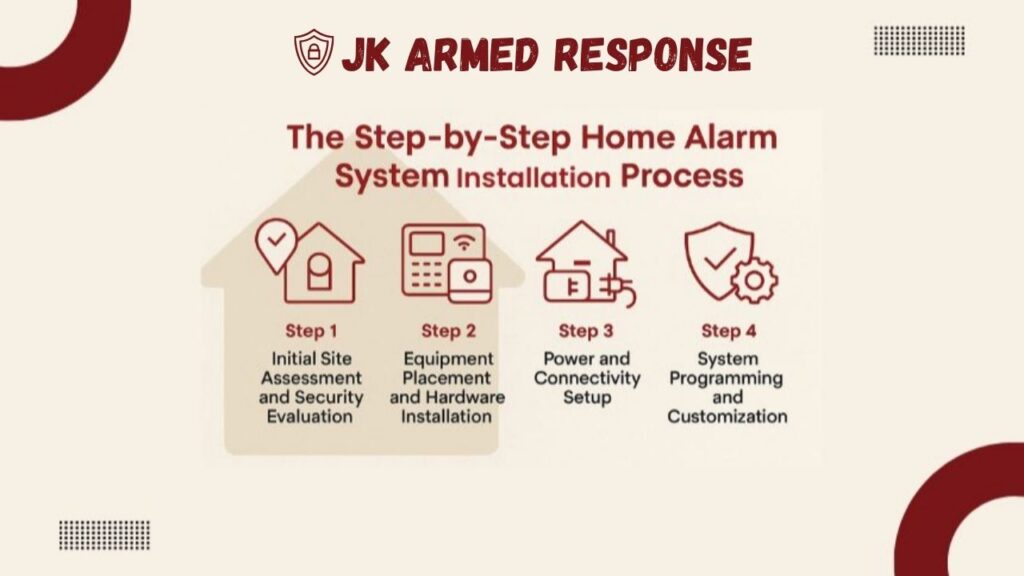
Step 2: Choose the Right System for Your Lifestyle – Wired, Wireless, or Hybrid?
Pick based on your needs. Wireless systems suit renters. They install fast, security system installation in under 2 hours. Batteries handle power cuts—key in South Africa with frequent load-shedding. Use lithium-ion types for longer life. Wired options work for permanent homes. They’re reliable, hardwired to avoid signal drops.
Hybrids combine both. JK recommends Security System Installation them for most SA homes. Add beams for perimeters and sirens for alerts. Include small dogs as early warnings—they deter 70% of intruders per UNISA research. For a Joburg family, we paired wireless indoor sensors with app controls. No drilling into walls. Cost? Starts at R4,000 for basics. Factor in armed response integration. That’s what makes it effective. Next, see what happens on install day.
Step 3: The Installation Day – What to Expect (And How We Make It Stress-Free)
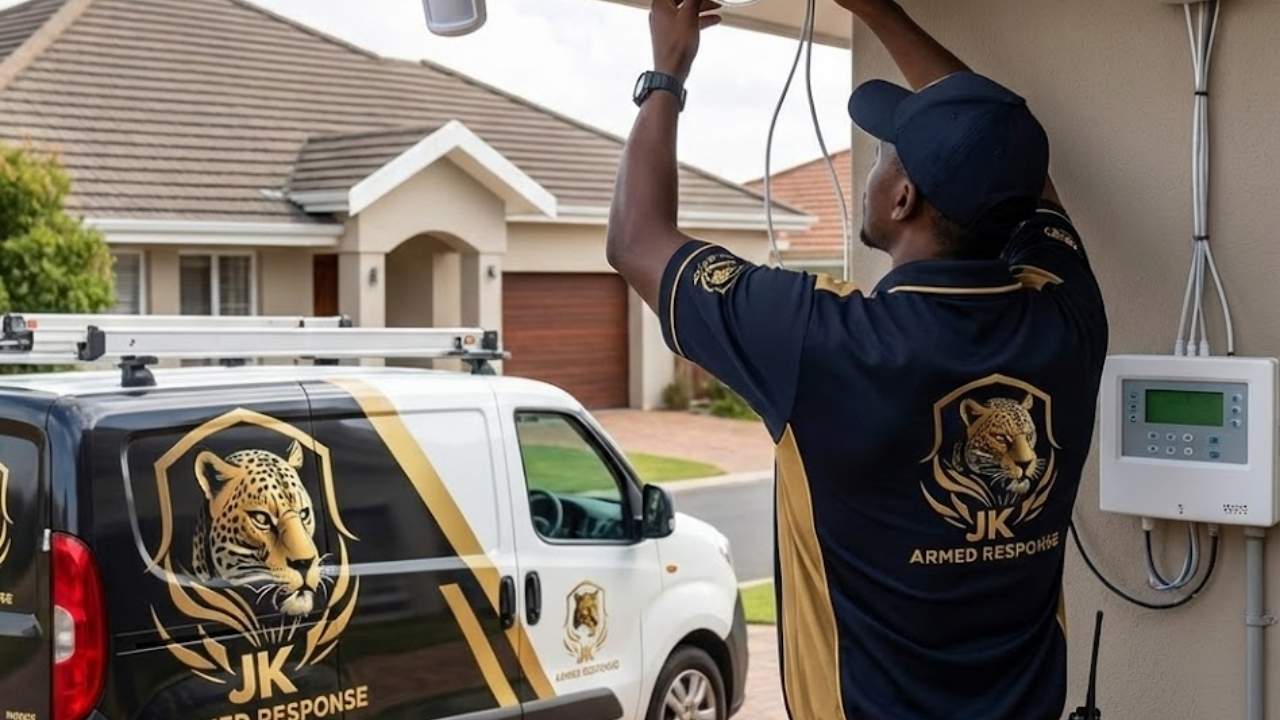
Plan for 4-6 hours. Our team arrives at 8 AM. We cover floors to avoid mess. First, mount the control panel. Place it centrally, away from windows. Then, install sensors on doors and windows. Angle them for full coverage—test each one live.
Midday, we wire or pair devices. For hybrids, connect beams outside. Handle load-shedding by adding backups. We explain every step. You approve placements. End with app setup for remote access. Activate monitoring. Common issue: Poor calibration causes 40% of false alarms. We tune sensitivity to fix that. Post-install, get a week of free adjustments. This ensures zero gaps. Now, link it to response teams for real power.
Step 4: Integrate with Armed Response – The Game-Changer for SA Homes
Alarms alone aren’t enough. Connect to pros like JK. Triggers send signals via GSM or RF. Our vans arrive in under 5 minutes—faster than average in urban areas. Add panic buttons for quick help. Geofencing arms the system when you leave.
One Pretoria client had a break-in attempt. Beams detected movement at 2 AM. Response team scared off intruders. No loss. SAPS stats show armed response cuts successful burglaries by 50%. Include CCTV for evidence. Access feeds remotely. For extra, add electric fences—deterrent for 80% of cases. Maintain these for ongoing safety. That’s the next key.

Maintenance and Upgrades: Keep Your System Sharp Year-Round
Check monthly. Remote diagnostics spot battery issues early. Replace every 2-3 years, especially with load-shedding. Clean sensors to avoid dust triggers.
Upgrade paths: Add AI cameras for 200m detection. Swap old wired for wireless—costs R2,000-R5,000. Annual audits qualify for insurance discounts, up to 25%. We handle claims paperwork. Test sirens quarterly. Involve family in drills. This keeps everyone prepared. Now, let’s talk costs without surprises.
Cost Breakdown: Transparent Pricing, No Hidden Fees
Starter packs: R5,000-R8,000. Includes panel, 4 sensors, install, and 1-year monitoring. For full homes: R15,000+ covers 8 sensors, beams, and response link.
Bundles save. Add patrols for 20% off. ROI? Prevent one break-in, save R50,000 in losses per average incident. No contracts force you—month-to-month options. Compare to national averages: DIY kits cost less but fail more. Pro install pays off long-term.
FAQs: Your Burning Questions Answered
How long for a 3-bedroom install? 4-6 hours, depending on wiring.
Can I DIY and add JK monitoring? Yes, but we recommend pro setup to avoid gaps.
What about load-shedding during install? We use generators and backups.
Do you cover Durban or Cape Town? Yes, nationwide teams.
For more on home security, check basics. But for SA specifics, we’re here.
Ready to Lock Down Your Peace of Mind? Book Your Free Site Visit Today
Contact us at jkarmedresponse.co.za or call 011-123-4567. Schedule now. Secure your home before stats catch up.
Security System Installation in South Africa: JK Armed Response Guide
Introduction: Tired of Worrying About Break-Ins? Let’s Get Your Security System Installed Right Housebreaking remains the top household crime in South Africa. In 2024/25, an estimated 1.5 million incidents occurred, affecting 5.7% of all households. That’s about 1 in 18 homes hit by burglars. In Gauteng alone, over 30% of these cases happen in urban […]

One thought on “Security System Installation in South Africa: JK Armed Response Guide”